
Imagine one of your employees working alone in a remote location. If something goes wrong, how quickly can you respond?
The reality is stark: nearly 15–20% of the global workforce (Source)works alone, often in high-risk environments. Additionally, 64% of lone workers face increased accident risks.
For businesses, this makes investing in the Best Lone Worker Safety Device critical, not just for safety, but for compliance and operational continuity. In this blog, you’ll discover key features, real-world benefits, and how IoT-powered solutions improve response time and worker protection.
Why Lone Worker Safety Is a Critical Business Priority Today?
Lone workers operate without direct supervision, often in high-risk, remote, or hazardous environments where response delays can be critical. For businesses, this creates measurable operational and financial risks. Some of the key business risks that you can’t ignore are:
- Delayed emergency response: Minutes lost due to lack of visibility can escalate minor incidents into major ones
- Compliance exposure: Regulations (OSHA/EHS) require active monitoring and incident reporting.
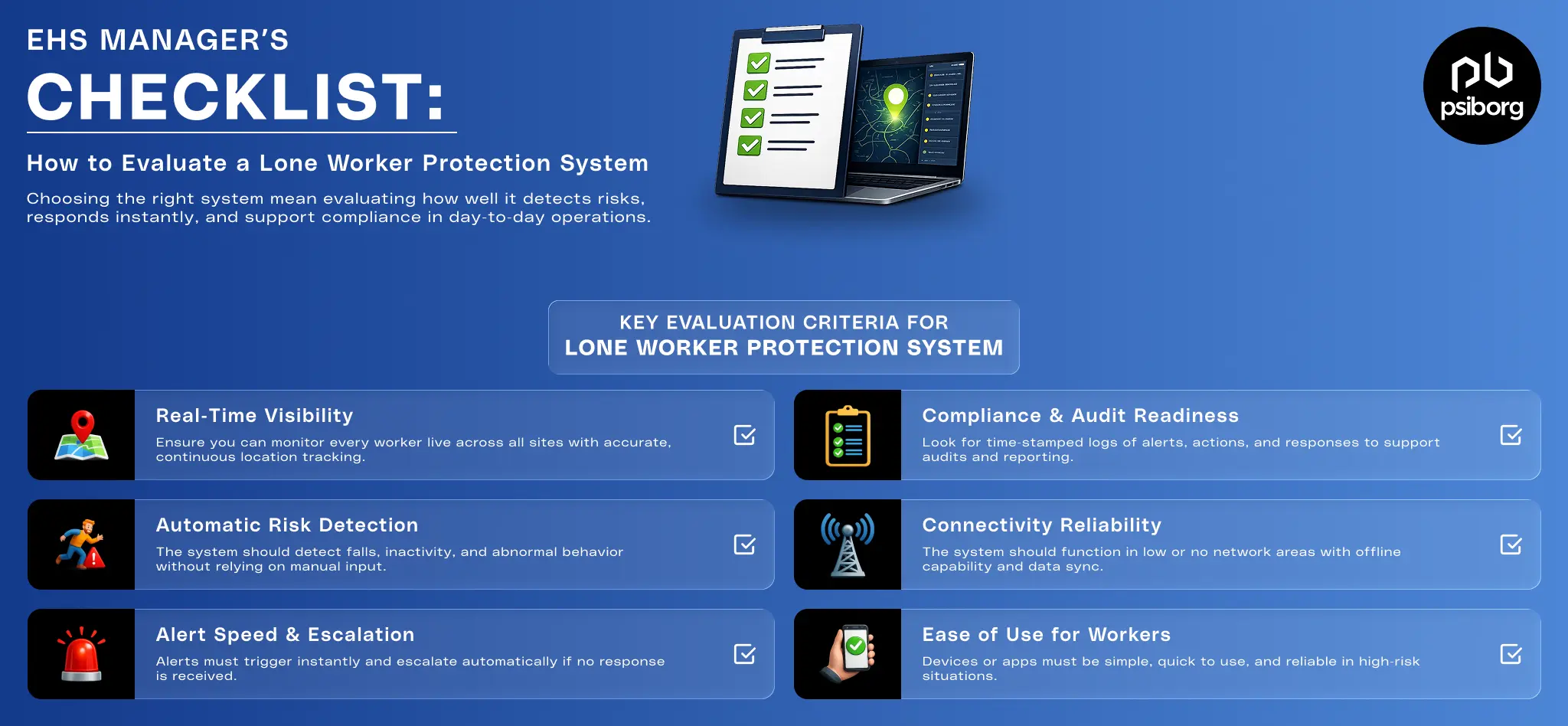
Also Read – What EHS Managers Should look for in a Lone Worker Protection System. - Operational downtime: Worker incidents can halt site operations and impact productivity
- Liability costs: Workplace injuries lead to compensation claims, legal costs, and reputational damage
This shift from delayed response to real-time protection is powered by advanced, connected safety devices.
What Is a Lone Worker Safety Device?
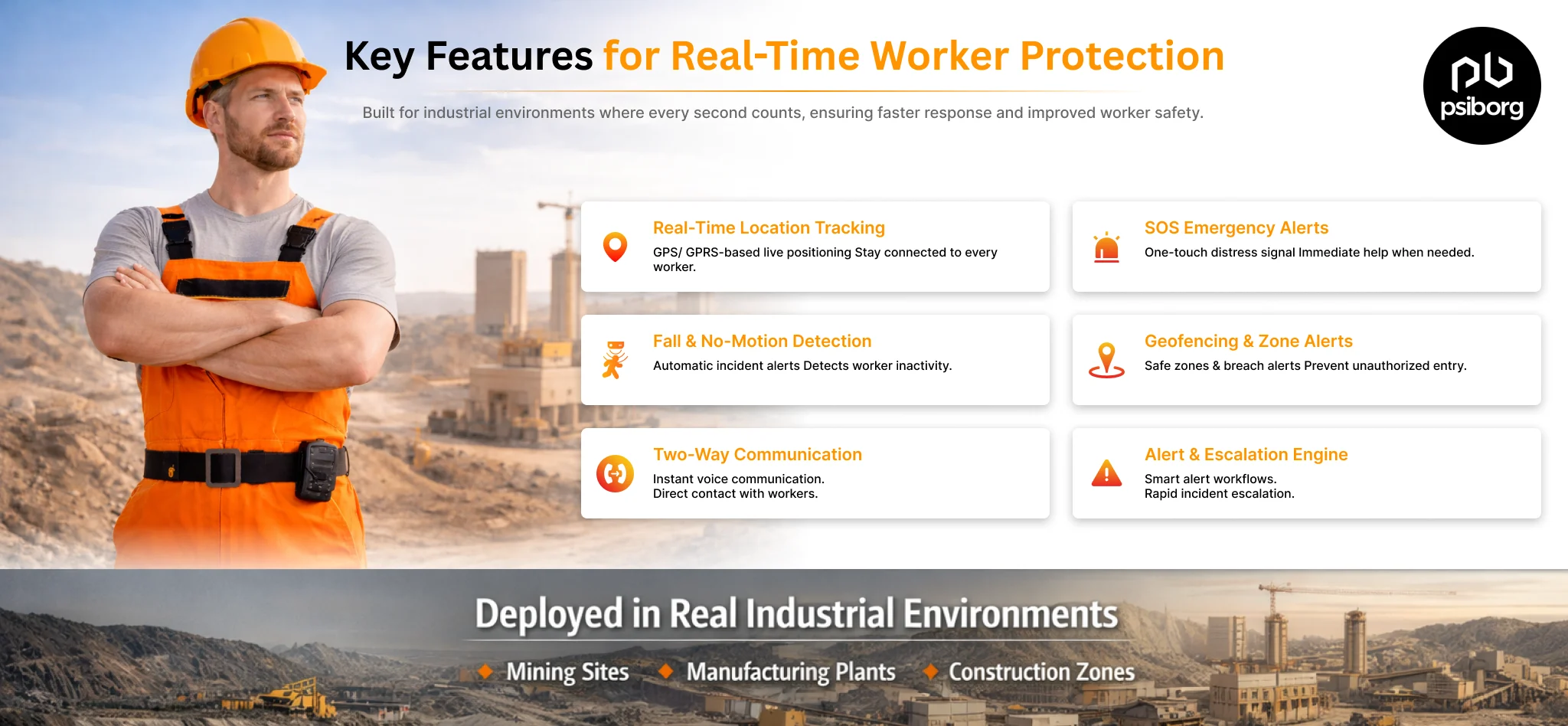
A lone worker tracking device is a connected safety system designed to protect employees working in isolation by continuously monitoring their status, detecting risks, and triggering immediate alerts. Unlike basic safety tools, it works in real time, ensuring that if something goes wrong, the right people are notified instantly.
In practice, the device combines multiple functions to ensure end-to-end protection:
- Tracks worker location in real time using GPS
- Detects falls, inactivity, or unusual motion through built-in sensors
- Sends instant SOS alerts to supervisors or control centers
- Enables two-way communication during emergencies
This is made possible by a set of integrated components working together:
- GPS module for accurate, real-time location visibility
- Motion sensors (accelerometer/gyroscope) to automatically detect incidents
- Connectivity (cellular or satellite) to transmit alerts without delay
- Cloud-based dashboard for centralized monitoring and faster decision-making
Together, these elements create a system that moves lone worker safety from manual, reactive processes to a proactive, always-connected approach, helping businesses reduce response time and operational risk.
Now that you understand how these devices work, the next step is identifying the features that actually make them reliable in real-world conditions.
Why GPS Tracking and Instant Alerts Are Critical in Lone Worker Safety Devices?
In remote or isolated work environments, the biggest challenge isn’t just detecting an incident; it’s locating the worker quickly and responding without delay. This is where a lone worker device with GPS and alerts becomes essential.
Without accurate location data, response teams lose valuable time identifying where the worker is. In high-risk scenarios, even a few minutes can significantly impact outcomes.
Here’s how GPS and alert systems improve lone worker safety:
Real-time GPS tracking:
Continuously shares the worker’s exact location, enabling faster emergency response and eliminating delays caused by location uncertainty.Instant SOS alerts with location data:
Sends precise coordinates along with alerts, allowing teams to act immediately and reduce escalation time.Live movement tracking:
Monitors whether a worker is moving, stationary, or off-route, improving accountability across remote and distributed sites.Location history logs:
Captures movement data for incident analysis, supports compliance reporting, and helps reduce operational risks over time.
While location tracking improves response speed, some of the most critical incidents occur when workers are unable to call for help.
Best Lone Worker Safety Device with GPS, Automatic Fall and No – Motion Detection for Critical Scenarios
In high-risk environments, relying only on manual SOS alerts is not enough. If a worker slips, collapses, or becomes unconscious, the system must detect the incident automatically. This is where a lone worker device with SOS button, GPS tracking, and fall detection becomes essential.
Here’s how GPS and fall detection work together to deliver complete, real-world protection:
Automatic fall detection using sensors:
Accelerometers and gyroscopes detect sudden impacts, abnormal posture, or prolonged inactivity, identifying incidents like a fall followed by no movementInstant alert with real-time location:
The system automatically triggers an alert with precise GPS coordinates, ensuring responders know exactly where to go, even if the worker is unconsciousNo reliance on manual intervention:
Eliminates dependency on SOS activation, making it critical in situations where workers cannot respondFaster and more accurate emergency response:
Immediate detection and location sharing significantly reduce response time and escalation riskImproved safety across high-risk environments:
Especially effective for workers at height, in isolated industrial zones, or during night and low-visibility operations
With so many features available, the real challenge is choosing a device that actually fits your operational risks and environment. Check – TrackLone- Lone worker Safety Device which has all the above mentioned features
How to Choose the Right Lone Worker Safety Device for Your Business Needs
Selecting the right device isn’t about picking the most advanced option; it’s about choosing a solution that aligns with your work environment, risk level, and operational scale.
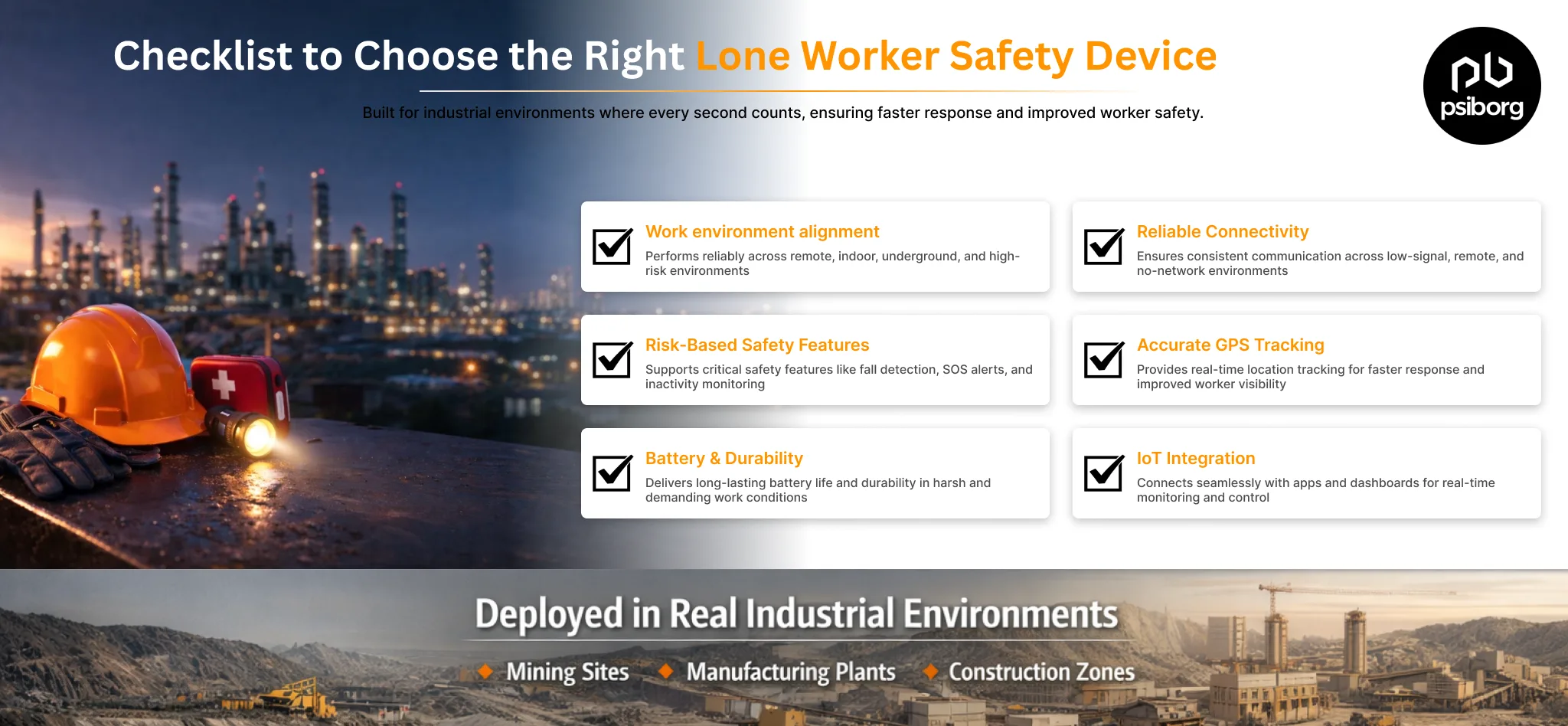
Here’s how to choose the right lone worker safety device that fits your business operations:
Work environment alignment:
Ensure the device suits the environments where your teams operate, remote sites, indoor facilities, underground zones, or high-risk environments, while offering the required durability.Connectivity reliability:
Select the right network support (cellular, satellite, or hybrid) to guarantee uninterrupted alert transmission, even in low or no-network areasRisk-based feature selection:
High-risk roles require capabilities like automatic fall detection, inactivity alerts, and instant SOS triggering.GPS accuracy and real-time tracking:
The real-time tracking device for workers must provide precise location data to enable faster emergency response and better visibility.Battery performance and rugged design:
It should last full work shifts and withstand harsh conditions like dust, water, and extreme temperatures.IoT-based integrated system:
Choose a solution that connects the device with a mobile app and a centralized dashboard for real-time monitoring and data-driven decisions.Scalability and compliance support:
The system should support multi-site operations and enable incident logging, reporting, and adherence to EHS standards.
Even with the right checklist in place, many businesses still end up choosing solutions that fail in real-world conditions.
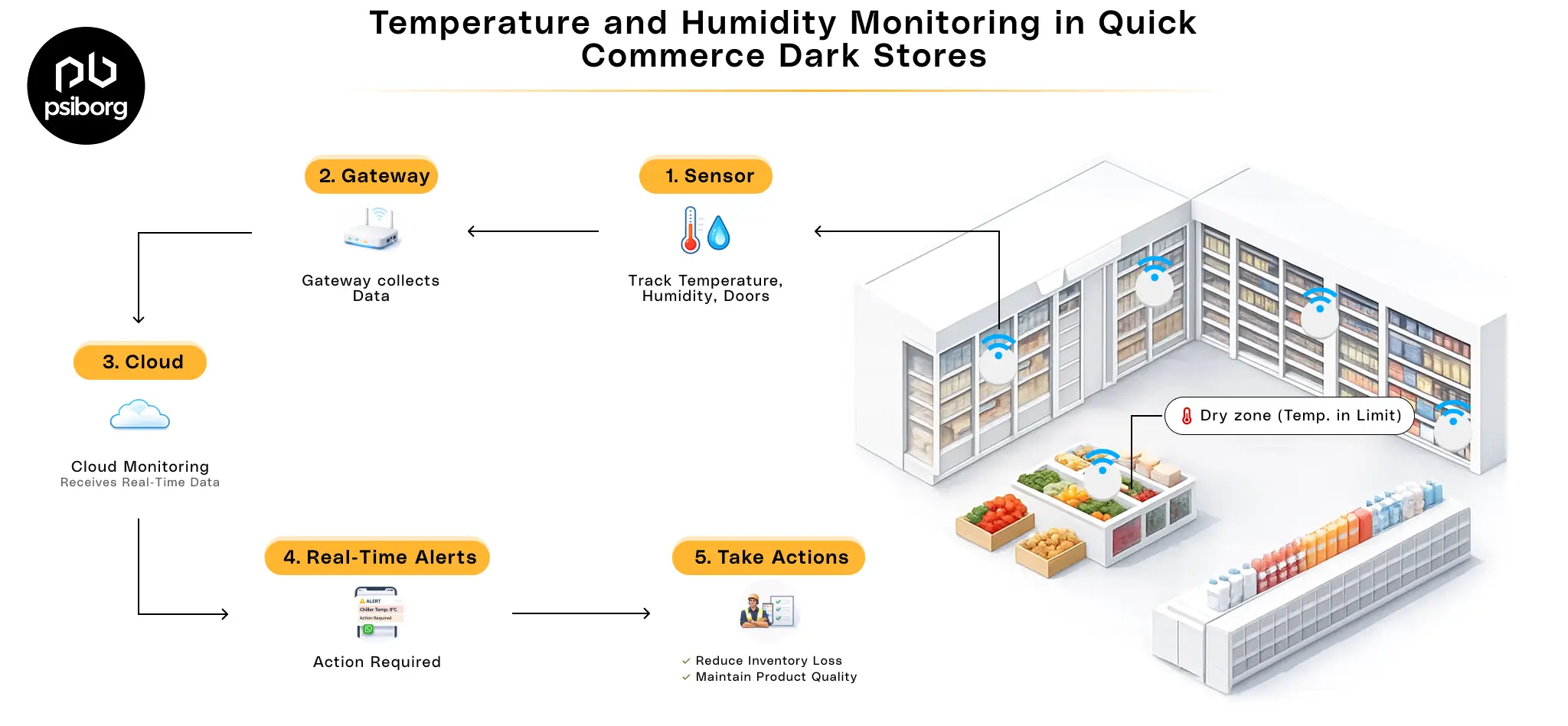
Look how Connected Lone worker safety ecosystem Works
Critical Mistakes to Avoid When Selecting a Lone Worker Safety Device
Choosing the wrong safety device doesn’t just reduce effectiveness; it can lead to delayed response, compliance gaps, and increased operational risk. Most failures happen not because of a lack of features, but due to poor alignment with real working conditions.
Here are the most common mistakes businesses make:
- Prioritizing cost over reliability: Low-cost devices often lack accuracy, durability, or real-time capabilities, leading to failures during critical situations.
- Ignoring connectivity limitations: Choosing devices without considering network availability results in missed or delayed alerts in remote areas.
- Relying only on manual SOS alerts: Systems without automatic fall or inactivity detection fail when workers are unable to trigger alerts.
- No centralized monitoring system: Lack of a dashboard limits visibility, making it harder to track workers or respond quickly.
- Overlooking scalability: Devices that work for small teams may not support multi-site or growing operations.
- Lack of compliance and reporting features: Without proper data logging, businesses struggle with audits and incident documentation.
Once you’ve seen what works and what doesn’t, the next step is moving beyond standalone devices to a more complete safety approach.
Choose the Best Lone Worker Safety System for Remote Teams
A standalone device can detect incidents, but it often falls short when it comes to coordinating response, tracking multiple workers, and managing safety at scale. Modern businesses require a more integrated approach that connects every part of the safety workflow.
A complete lone worker safety for remote workers solution brings together multiple components into one connected system:
- Smart hardware devices: For real-time tracking, SOS alerts, and a fall detection device for lone workers in the field
- Mobile applications: To enable communication, alert acknowledgment, and on-the-go visibility
- Centralized admin dashboard: For live monitoring, incident management, and decision-making across sites
This integrated setup ensures that alerts are not just triggered, but received, assessed, and acted upon without delay.
Instead of managing disconnected tools, many businesses are now adopting platforms like a lone worker safety monitoring solution, where hardware, software, and monitoring are unified to deliver end-to-end visibility and faster response.
This approach helps organizations reduce response time, improve accountability, and maintain consistent safety standards across all operations.
To Sum Up
At the end of the day, lone worker safety for remote workers comes down to one thing: how quickly you can detect a risk and respond to it. In remote and high-risk environments, delays aren’t just costly, they’re dangerous.
That’s why relying on standalone devices is no longer enough. Businesses need solutions that combine real-time tracking, automatic fall detection, and centralized monitoring to ensure every incident is detected and addressed without delay.
The most effective approach is a connected, IoT-based system that brings together devices, software, and live dashboards, giving you complete visibility and control over worker safety.
Ready to move beyond standalone devices?
Partner with PsiBorg to build a fully customized, IoT-based lone worker safety system tailored to your operations, combining hardware, software, and real-time monitoring in one solution.