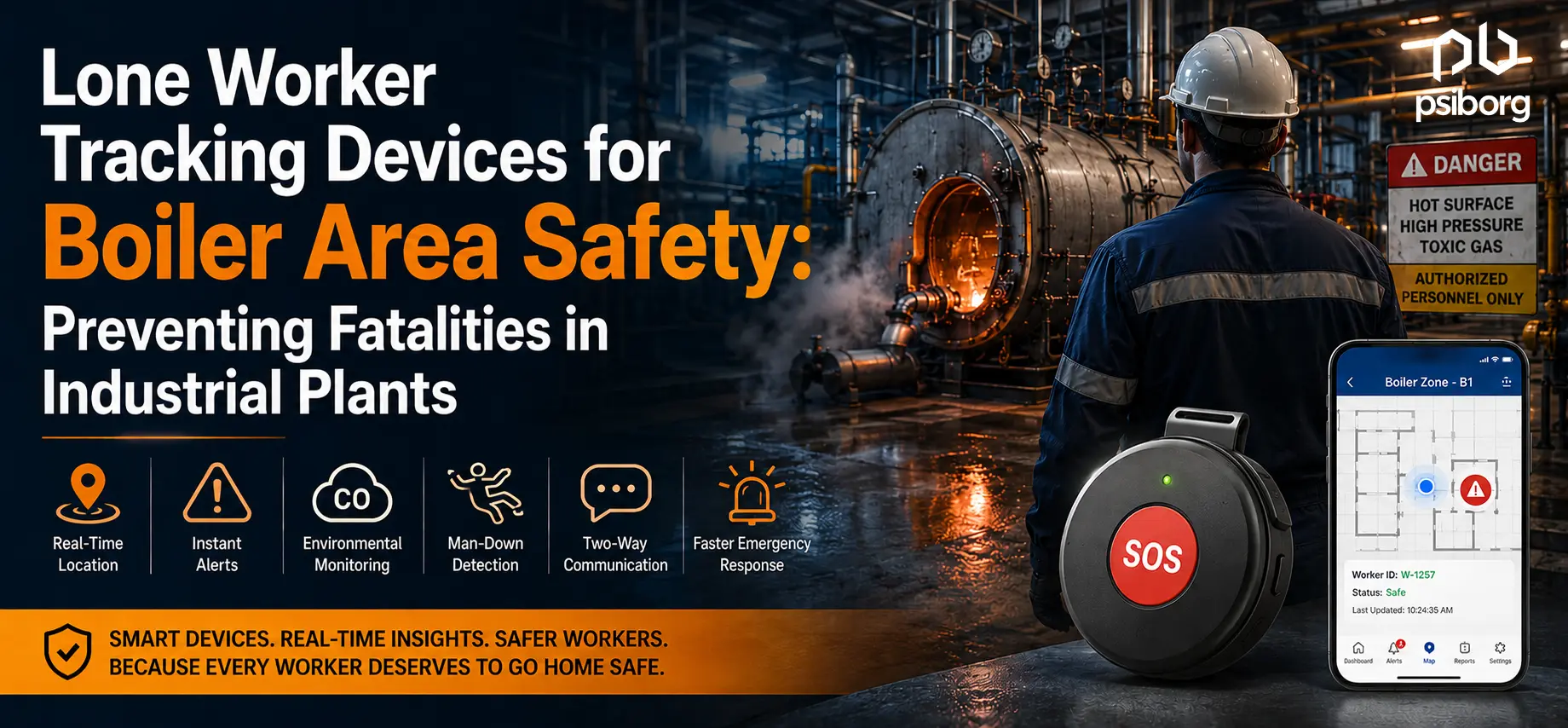

If something goes wrong and your worker is alone, who knows, and how fast can you respond?
If you’re an EHS manager, this isn’t just a safety concern; it’s a business risk. Delayed emergency response, compliance gaps, and operational downtime can directly impact costs and reputation. That’s why understanding the right Lone worker protection system is critical.
Here’s the reality: around 15% of the global workforce operates as lone workers, often in high-risk environments where help isn’t immediately available. Even more concerning, 20% report struggling to get assistance during an incident, highlighting critical response gaps.
In this blog, we’ll walk you through what to look for in a lone worker protection system, so you can protect your workforce and make smarter, safer decisions.
Key Compliance Risks EHS Managers Must Address
Many EHS teams believe they are compliant until an incident or audit exposes operational blind spots. The real challenge lies in identifying gaps that impact response time, documentation, and visibility. Here are the most critical risks you need to address as an EHS manager:
- Delayed Incident Response: Without real-time alerts, response times increase, violating duty-of-care expectations and raising liability risks.
- No Verifiable Safety Checks: Manual check-ins lack proof. During audits, missing time-stamped records can lead to non-compliance.
- Incomplete Incident Documentation: Paper-based or delayed reporting creates gaps in audit trails and weakens legal defense.
- Limited Visibility Across Sites: Disconnected systems prevent centralized monitoring, making compliance inconsistent across locations.
So, how do you actually close these compliance gaps and ensure your lone workers are consistently protected?
Lone Worker Protection System: What It Really Means for EHS Teams
A lone worker protection system is a complete safety ecosystem designed to monitor, detect, and respond to risks in real time. For EHS teams, it acts as a compliance enabler, ensuring every safety action is recorded, traceable, and actionable.
The lone worker protection system includes:
- Smart Devices: SOS button, fall detection, inactivity alerts
- Real-Time Monitoring Software: Live tracking, geofencing, centralized dashboard
- Automated Workflows: Check-ins, alert escalation, emergency response triggers
- Compliance Logs: Time-stamped data for audits and reporting.
Here’s how it works:
Worker risk detected → Alert triggered → Supervisor notified → Action taken → Incident logged
Now that you understand how these systems work, the next step is knowing what actually makes a system reliable, compliant, and effective in real-world conditions.
Must-Have Features in a Lone Worker Protection System for EHS Compliance
Not all systems are built the same. For EHS managers, the focus should be on features that reduce response time, ensure traceability, and support compliance, not just basic tracking. Core features you should look for:
Real-Time Location Tracking & Geofencing:
Get live visibility of every worker’s location with map-based tracking. Set geofences around high-risk or restricted zones and receive instant alerts when workers enter, exit, or remain in unsafe areas beyond defined limits.
SOS / Panic Alerts (Automatic):
Workers can trigger emergency alerts instantly with a single button press. Systems should also support automatic triggers (like falls or inactivity), ensuring alerts are sent even if the worker is unable to act.
Man-Down & Inactivity Detection:
Uses motion sensors to detect falls or prolonged inactivity. If no movement is detected within a set time, the system automatically raises an alert, critical in situations where workers may be unconscious.
Automated Check-Ins with Escalation:
Workers receive scheduled prompts to confirm their safety. If a check-in is missed, the system escalates alerts to supervisors or emergency contacts based on predefined workflows.
Two-Way Communication:
Enables real-time communication between workers and control teams through calls or messages, allowing faster situation assessment and immediate guidance during emergencies.
Centralized EHS Dashboard:
Provides a single interface to monitor all workers, active alerts, and site activities in real time, helping EHS teams manage multiple locations efficiently.
Audit-Ready Incident Logs:
Automatically records every alert, response, and action with timestamps, creating a reliable audit trail that supports compliance and simplifies reporting.
Offline / Low-Network Functionality:
Ensures the system continues to function in remote or low-connectivity areas by storing data locally and syncing it once the network is restored.
But here’s the real question: what actually works on a factory floor, mine, or oil site where risks are constant, and conditions are unpredictable?
See how PsiBorg deployed Lone worker safety solution across industries.
Choosing the Best Lone Worker Safety System for Industrial Workers
In industrial environments, a basic safety system isn’t enough. You need a high-reliability, IoT-enabled solution that can operate in harsh, remote, and high-risk conditions, while ensuring real-time response and compliance.
A strong industrial-grade lone worker tracking device should combine wearables, sensors, and intelligent software into one connected safety network.
Here’s what defines an effective industrial system:
- IoT Wearables + Smart Devices: Helmets, watches, or badges that track movement, vitals, and location in real time, ensuring workers are never “invisible” on site.
- Environmental & Hazard Monitoring: Detects gas leaks, heat stress, or unsafe conditions using sensors, critical for oil, gas, and mining environments.
- Real-Time Alerts with Automated Response: Systems can reduce response time significantly by triggering alerts instantly and initiating emergency workflows.
- Edge / Offline Capability: Continues working even without network connectivity, critical for underground or remote sites.
Also Read: Worker Tracking Solutions: Choosing Between BLE and GPS for Indoor & Outdoor Visibility
Having the right system is just the start; the real impact comes from how effectively you monitor workers in real time and respond the moment a risk occurs.
How to Monitor Lone Workers in Real Time?
Real-time lone worker monitoring goes beyond GPS tracking; it’s about continuous visibility, instant alerts, and fast response. IoT-based safety devices connect workers, supervisors, and systems into one live network, ensuring no incident goes unnoticed. Here’s how real time monitoring works:
- Connected IoT Devices: Wearables or handheld devices continuously send location, movement, and status data to a central system.
- Live Dashboard Monitoring: EHS teams can track all workers across sites in real time, with alerts highlighted instantly.
- SOS-Triggered Emergency Response: Workers can press an SOS button to send immediate alerts with location data to supervisors.
- Automated Risk Detection: Fall detection, inactivity alerts, or geofence breaches trigger alerts without manual input.
With so many features and options available, the real challenge is choosing a system that actually meets your safety and compliance needs, not just on paper, but in real operations.
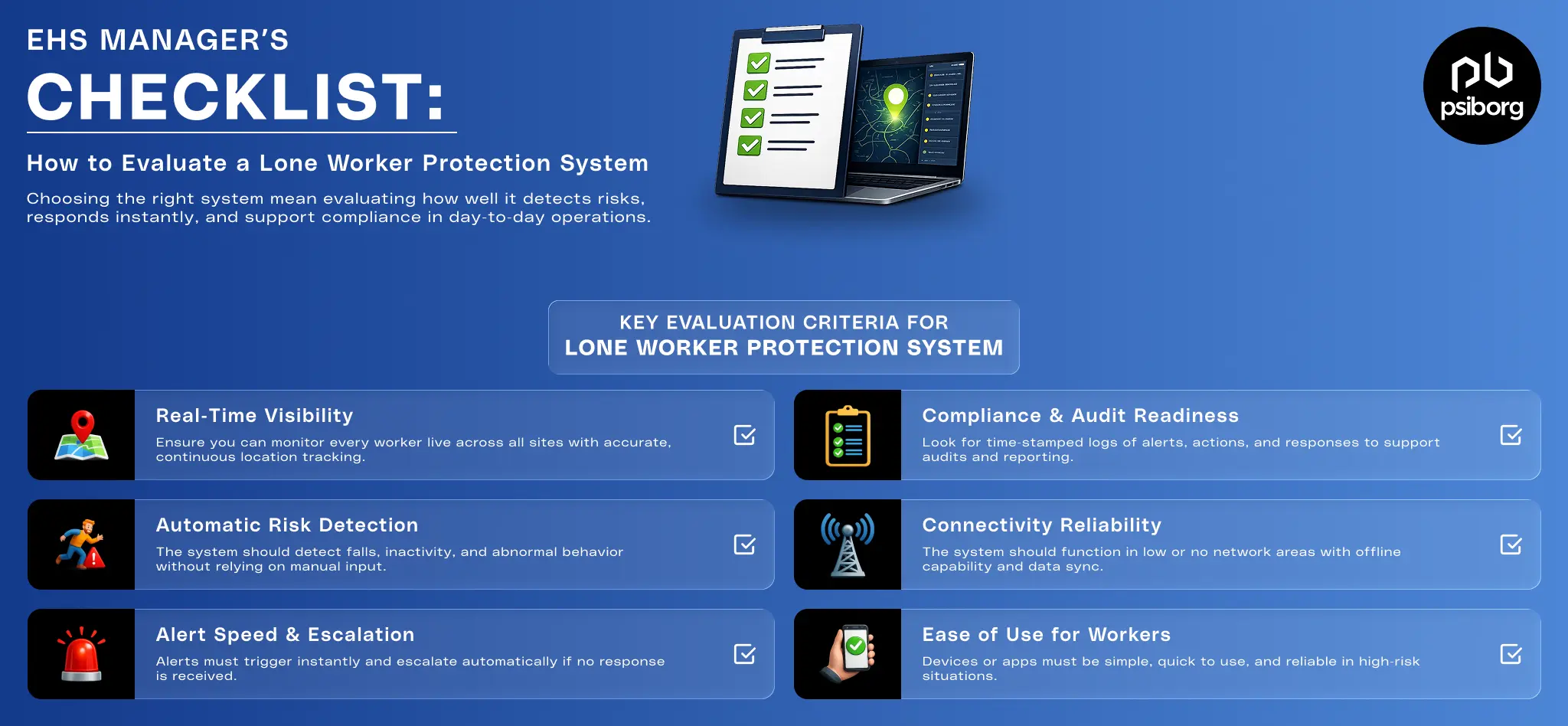
EHS Manager’s Checklist: How to Evaluate a Lone Worker Protection System
Choosing the right system means evaluating how well it detects risks, responds instantly, and supports compliance in day-to-day operations. Use this checklist to make a confident, audit-ready decision:
Below are given some key evaluation criteria that EHS managers should consider while selecting a lone worker protection system:
Real-Time Visibility:
Ensure you can monitor every worker live across all sites with accurate, continuous location tracking.
Automatic Risk Detection:
The system should detect falls, inactivity, and abnormal behavior without relying on manual input.
Alert Speed & Escalation:
Alerts must trigger instantly and escalate automatically if no response is received.
Compliance & Audit Readiness:
Look for time-stamped logs of alerts, actions, and responses to support audits and reporting.
Connectivity Reliability:
The system should function in low or no network areas with offline capability and data sync.
Ease of Use for Workers:
Devices or apps must be simple, quick to use, and reliable in high-risk situations.
System Integration:
It should integrate smoothly with your existing EHS or safety management systems.
Scalability:
Ensure it can support multiple sites, teams, and future operational growth.
Also Read: Real-Time Security Guard Monitoring with SOS and Geo-Fenced Checkpoints
Once you know what to look for, the next step is partnering with a provider who can actually deliver a system that meets these standards in real environments.
How PsiBorg Built a Compliance-Ready Lone Worker Protection System for Your Operations
PsiBorg goes beyond devices; we designed a complete product TrackLone- IoT-based workers safety ecosystem tailored to your industry risks, workflows, and compliance requirements. The focus is not just on monitoring, but ensuring faster response, full visibility, and audit-ready safety processes. PsiBorg delivers:
- End-to-End IoT Integration (Hardware + Software): Custom-built wearables, sensors, and a centralized dashboard working as one connected system.
- Risk-Based System Design: Solutions tailored for your environment, whether it’s mining, construction, or manufacturing.
- Real-Time Monitoring & Intelligent Alerts: Instant detection of falls, inactivity, and SOS triggers with automated escalation workflows.
- Compliance-Ready Reporting: Time-stamped logs, incident history, and automated reports to simplify audits and inspections.
- Reliable Performance in Harsh Conditions: Devices and systems designed for low network, remote, and high-risk industrial environments.
- Scalable & Integrable Architecture: Easily integrates with existing EHS systems and scales across multiple sites and teams.
Don’t settle for basic tracking, upgrade to a complete, IoT-driven lone worker protection system designed for real risks and real compliance. Get your Lone worker solution today!