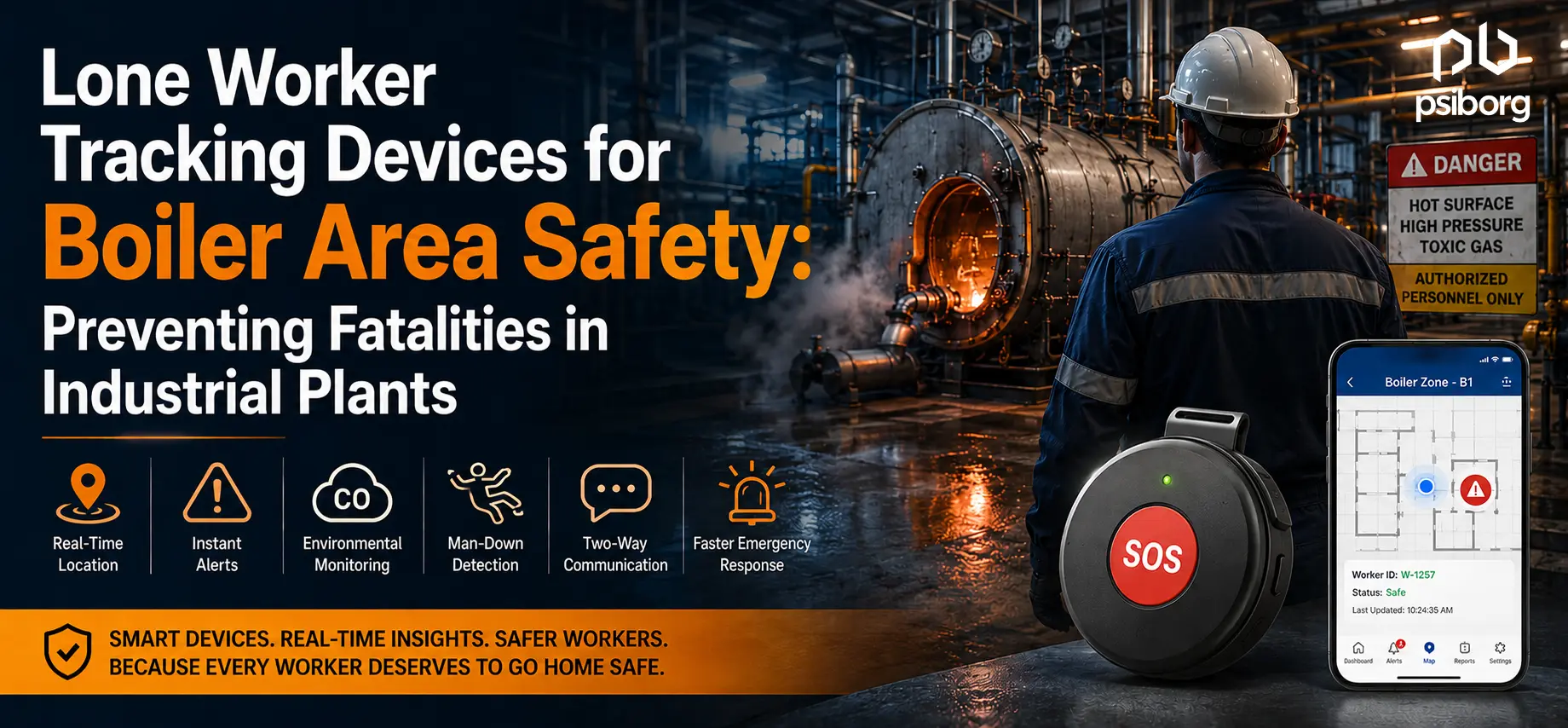
Your worker isn’t always within reach, but their safety system should be. In high-risk industries, relying on lone worker apps alone can be risky, especially when connectivity fails or phones aren’t actively monitored.
That’s the hidden risk of lone working. According to the National Institute for Occupational Safety and Health, nearly 15% of the global workforce operates as lone workers, often without immediate access to help, increasing the severity of incidents due to delayed response.
What makes this more concerning is that many businesses still rely on systems that aren’t built for harsh, real-world conditions. So the real question isn’t whether you need a safety system, it’s whether your current solution is reliable when it matters most.
That’s where the debate around lone worker apps vs hardware devices becomes critical. In this blog, we break down both options and explain why hardware-based solutions are often the safer choice for industrial use.
What Are Lone Worker Safety Solutions?
Lone worker safety solutions are designed to monitor workers in isolation, detect incidents, and trigger immediate emergency response, especially in high-risk industrial environments like construction sites, factories, and remote locations. These systems ensure that if something goes wrong, help is alerted without delay, reducing response time and operational risk.
Broadly, these solutions fall into two types: app-based systems, which run on smartphones and rely on manual input and connectivity, and hardware-based devices, which are purpose-built with features like automatic fall detection and continuous tracking. The difference ultimately comes down to reliability, automation, and performance in real-world conditions.
What Are Lone Worker Safety Apps?
Lone worker safety apps are smartphone-based solutions designed to support employees working in isolation. They rely on the phone’s built-in features like GPS, internet connectivity, and motion sensors to deliver basic safety functionalities, making them more suitable for low-risk or controlled environments.
Typically, these apps provide:
- GPS-based location tracking using mobile networks
- Manual SOS alerts triggered through the app interface
- Scheduled check-ins or no motion reminders
However, their effectiveness depends on whether the app is actively running, the phone has sufficient battery, and network connectivity is stable, factors that can significantly limit performance in demanding industrial conditions.
Now let’s look at the alternative built specifically for high-risk and industrial environments.
What Are Hardware-Based Lone Worker Safety Devices?
Hardware-based lone worker safety devices are dedicated, purpose-built devices designed to operate reliably in harsh and high-risk work environments. Unlike apps, they don’t depend on personal smartphones, making them more consistent and predictable in critical situations.
These devices are engineered to deliver:
- Real-time location tracking with independent connectivity
- One-touch SOS buttons for instant emergency alerts
- Automatic fall detection and no-motion alerts without user input
Because they are always active and built for rugged use, these devices eliminate common risks like battery drain, app inactivity, or signal dependency, ensuring continuous monitoring and faster emergency response when it matters most.
Also Read: What EHS Managers Should Look for in a Lone Worker Protection System
Now that you’ve seen how both solutions work individually, the real difference comes down to how they perform when safety is on the line.
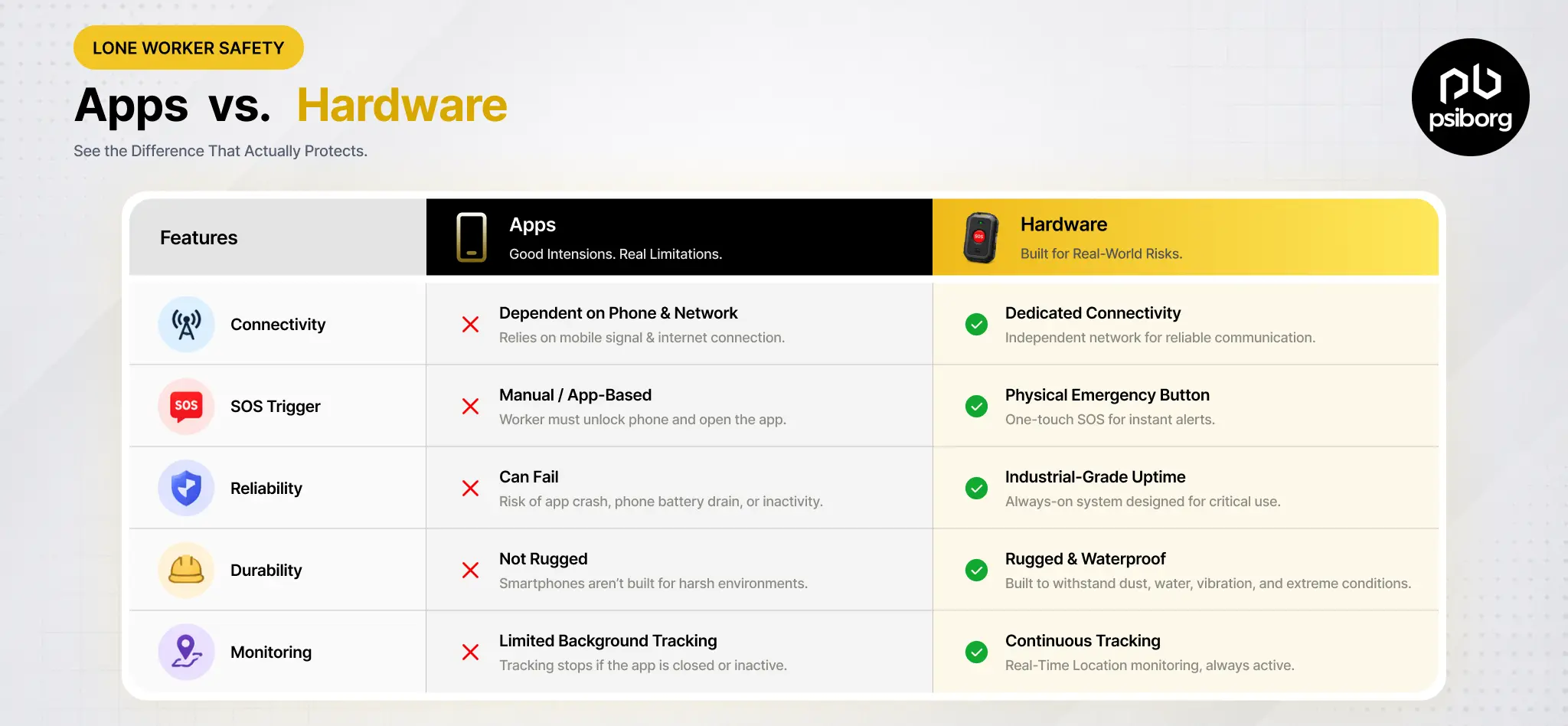
Lone Worker Apps vs Hardware: Key Differences That Impact Safety
While both apps and hardware devices aim to improve lone worker safety, their real-world performance differs significantly in industrial environments. The gap becomes clear when you evaluate them across reliability, automation, and response time, factors that directly impact worker survival and operational risk.
Here’s a side-by-side comparison to help you assess what truly works in critical situations:
Feature | Apps | Hardware |
Reliability | Dependent on phone usage and app running status. | Always-on, dedicated system. |
Connectivity | Requires a stable mobile network. | Multi-network / independent connectivity. |
Emergency Alerts | Mostly manual (user-triggered). | Automatic (fall, no-motion detection). |
Response Time | Delayed if the app is inactive or unnoticed. | Instant alerts with real-time escalation. |
Durability | Not built for harsh environments. | Rugged, industrial-grade design. |
Battery Dependency | Shares phone battery (high drain risk). | Long-lasting dedicated battery. |
Ease of Use | Requires unlocking the phone & opening the app. | One-touch SOS, always accessible. |
Compliance & Reporting | Limited tracking and logs. | Built for audit trails and compliance. |
In controlled environments, apps may offer basic coverage, but in industrial settings, where conditions are unpredictable, hardware devices deliver the reliability and automation needed to ensure timely intervention and worker safety.
Why Lone Worker Apps Fall Short in Industrial Environments
Lone worker apps may appear cost-effective and easy to deploy, but in industrial settings, their practical limitations become critical safety gaps. These environments demand consistent performance, minimal user dependency, and real-time response, areas where app-based solutions often struggle.
Key limitations include:
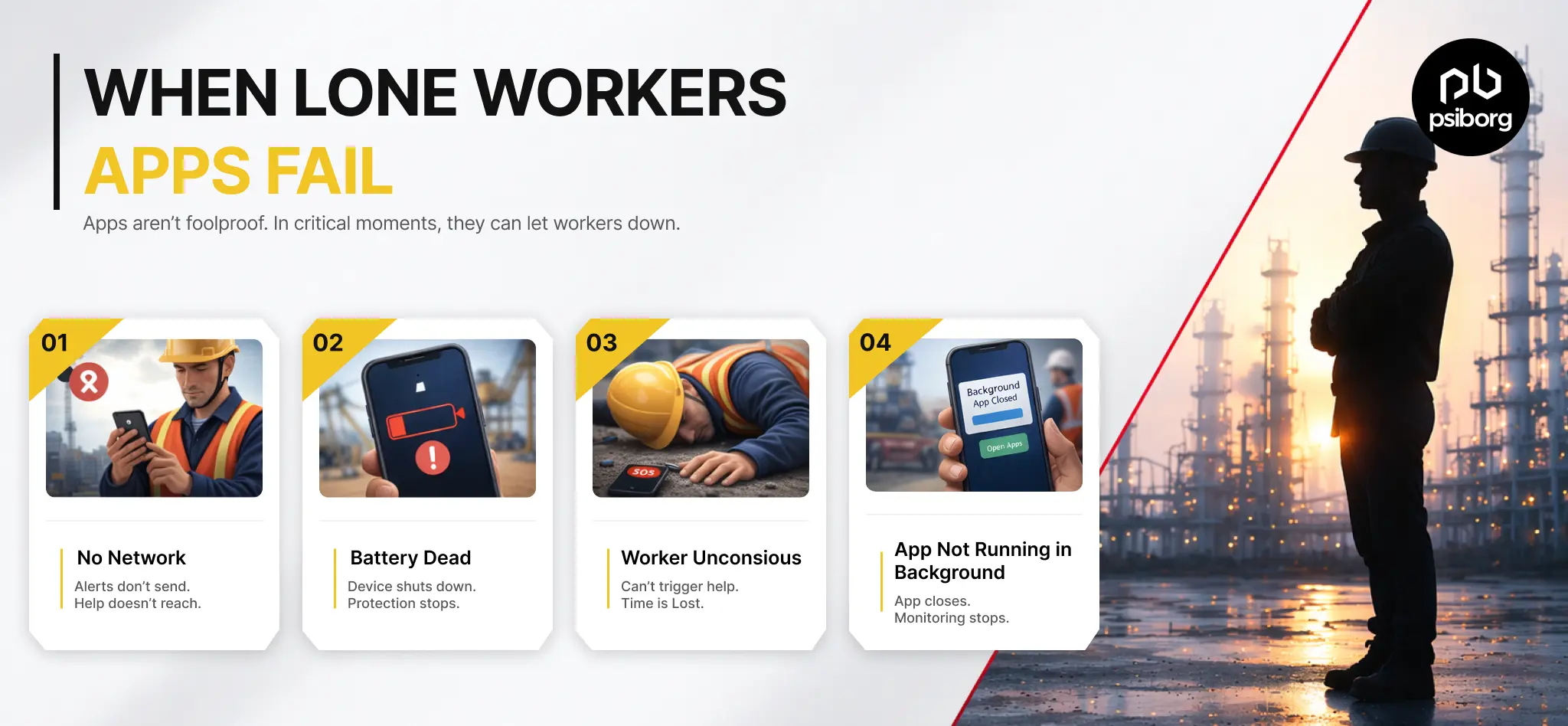
Apps Stop running in Background :
Apps require users to keep them active, respond to check-ins, or manually trigger alerts, leaving room for human error during emergencies.
Unreliable Connectivity in Remote Areas:
Industrial sites often have weak or no signal, causing delays or complete failure in alert transmission.
No Automatic Incident Detection:
Unlike dedicated devices, apps lack reliable fall detection or no-motion alerts, delaying emergency response.
Battery & Device Limitations:
Continuous tracking drains smartphone batteries quickly, increasing the risk of the system shutting down when needed most.
If apps struggle to perform in real industrial conditions, businesses need a solution built to deliver consistent and reliable safety without compromise.
Why Hardware-Based Lone Worker Safety Systems Are More Reliable?
Hardware-based lone worker tracking devices are purpose-built for industrial environments where failure is not an option. Unlike apps, they remove dependency on personal devices and are engineered to deliver consistent, real-time safety monitoring under challenging conditions.
What makes hardware based lone worker safety solution more reliable:
Always-On Monitoring (No User Dependency):
Devices continuously track location and status without requiring workers to open apps or trigger actions, reducing human error.
Automatic Incident Detection:
Built-in sensors enable fall detection, impact sensing, and no-motion alerts, ensuring emergencies are identified even if the worker is unconscious.
Independent & Stable Connectivity:
Uses dedicated SIM, multi-network, or long-range communication (like LoRa), ensuring alerts are transmitted even in low-signal zones.
Rugged, Industrial-Grade Design:
Built to withstand dust, water, vibration, and extreme temperatures, unlike consumer smartphones.
Faster Emergency Response & Escalation:
Instant alert transmission to centralized dashboards enables quicker decision-making and response coordination.
Choosing the right solution now comes down to aligning safety capabilities with your actual work environment and risk level.
How to Choose the Right Lone Worker Safety Solution
In industrial environments, selection should be based on risk exposure, site layout, and response requirements, not just basic features. A mismatch can lead to delayed alerts and higher liability.
Focus on these critical factors:
Site Conditions:
Remote mines, large plants, or confined zones need rugged hardware with wide-area coverage, not phone-dependent apps.
Response Time Requirements:
High-risk roles demand automatic fall/no-motion detection, not manual SOS reliance.
Network Reality:
Remote or low-signal areas require multi-network, specific telecom network, or long-range connectivity.
Operational Control:
Central dashboards with real-time tracking and alert escalation workflows are essential.
To make this decision clearer, it helps to map each solution directly to where it actually performs best.
When to Choose Apps vs Hardware
Not every work environment requires the same level of safety infrastructure. The choice between apps and hardware should be based on risk level, work conditions, and required response speed.
Choose Apps When:
- Work is in low-risk, urban, or indoor environments (e.g., offices, retail, field sales).
- Workers have consistent network access and can actively use smartphones.
- Safety needs are limited to basic tracking and manual alerts.
Choose Hardware When:
- Work involves industrial, remote, or hazardous environments (e.g., construction, mining, manufacturing).
- Immediate response is critical, requiring automatic fall/no-motion detection.
- Conditions include poor connectivity, harsh weather, or restricted phone usage.
This is where TrackLone takes it a step further, combining hardware reliability with a connected IoT platform for complete safety visibility and faster response.
Conclusion: Apps vs Hardware: What Should You Choose?
When it comes to lone worker safety, the choice is less about preference and more about risk, reliability, and response time. While apps may offer basic functionality for low-risk environments, they fall short in conditions where safety depends on instant detection and uninterrupted performance.
For industrial operations, hardware-based solutions provide the consistency, automation, and durability required to protect workers in real-world scenarios. They reduce dependency on human action and ensure that emergencies are detected and addressed without delay.
If your workforce operates in high-risk or remote environments, upgrading to a hardware-led IoT safety system is a necessity.
Talk to PsiBorg to move beyond one-size-fits-all solutions. As a full-stack IoT service partner, PsiBorg designs and deploys custom-built lone worker safety systems tailored to your industry, site conditions, and risk levels, combining rugged hardware, real-time monitoring dashboards, and intelligent alert workflows.
From device to dashboard, we help you improve response times, ensure compliance, and gain complete visibility across operations. Connect with our experts to build a solution that fits your exact safety needs.