BLE Beacon-Based Crowd Management Systems
- Home
- Case Studies
- BLE Beacon-Based Crowd Management Systems
India
Monitoring and Tracking
Safety and Incident Management, Real Time Crowd Monitoring, Emergency Response Management
Project Highlights
- Kumbh Mela, known for its massive footfall, presents unique challenges in crowd management, emergency response, and cleanliness.
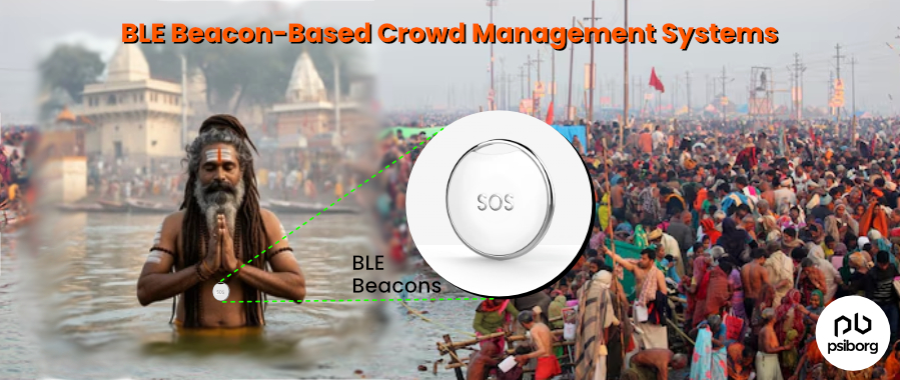
- The requirement was to build a BLE Beacon-Based crowd management system where the families can track their elderly members and children.
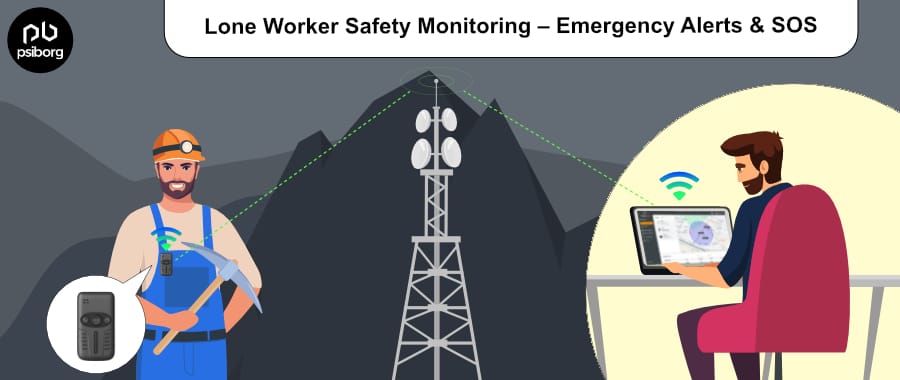
- Also , if a member is lost , he/she can send SOS so that the emergency response/head family member can be reached out immediately.
- This case study explores how BLE (Bluetooth Low Energy) beacons combined with strategically placed gateways can offer real-time monitoring and safety.
- Moreover, the system could find out the situation which can result to stampede proactively.
- Security teams can locate individuals needing assistance through centralized dashboards.
Our Innovative Solution
- By leveraging BLE Beacon-Based Crowd Management Systems you can seamlessly monitor crowd, visitor tracking, and and efficient emergency response..
- Centralized dashboards visualize high-density areas through dynamic heat maps.
- Visitors are equipped with BLE tags for location tracking across the venue. These tags are also equipped with a SoS button.
- A mobile app allows separated family members to locate each other easily.
- BLE Beacon-Based Crowd Management Systems analyzes movement patterns to detect unusual behaviors, such as rapid crowd dispersal.
- Triggers alerts for predefined thresholds of density or movement, helping to mitigate risks of stampedes or chaos.
Benefits
- Enhanced Safety: Prevents overcrowding and ensures timely emergency response.
- Improved Visitor Experience: Facilitates easy location tracking and assistance.
- Actionable Insights: Analytics enable better planning for future events
What We Delivered

Dashboard & App with heat map visualization, emergency alerts

BLE Beacons, Gateways connected via Wi-Fi/4G
Features
1
Real-time Crowd Density Monitoring
- BLE beacons track visitor movement in designated zones.
- Heat maps are generated on a centralized dashboard, highlighting high-density areas.
- Enables proactive crowd redistribution to prevent bottlenecks.
2
Visitor Tracking
- Visitors are provided with BLE tags for location tracking.
- In case of separation, family members can locate each other through a mobile app.
- Emergency teams can pinpoint locations of individuals needing assistance.
3
Visitor Behavior Analytics
- Movement patterns are analyzed to identify unusual activities, such as sudden crowd dispersal.
- Alerts are triggered when predefined thresholds for density or movement are exceeded, mitigating stampede risks.
4
Connected Emergency Response
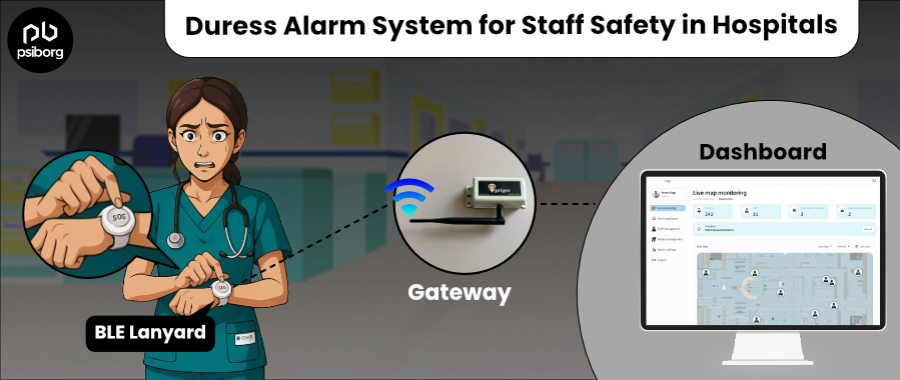
- SOS/Panic buttons are integrated with BLE tags to alert security personnel instantly.
- Real-time location sharing ensures swift deployment of help.
5
Footfall Counting at Entry and Exit Points
- BLE-enabled gateways track the number of visitors entering and exiting key zones.
- Provides real-time data on footfall to help manage crowd flow efficiently.
- Enables better allocation of resources based on visitor density.

We at PsiBorg are a click away. Please mail to us at info@psiborg.in
Just in case you need to understand anything and everything about IoT, Project requirement.
Projects Challenges
Overcrowding Risks: Managing millions of visitors while preventing stampedes.
Lost Individuals: Difficulty in locating loved ones amidst the vast gathering.
Emergency Response: Delayed reactions to incidents due to uncoordinated communication.
Footfall Monitoring: Inadequate mechanisms to track visitor counts at key entry and exit points.
Result
- Improved Crowd Flow: Smooth dispersal in congested areas.
- Faster Emergency Response: Response time reduced by 30%.
- Accurate Footfall Data: Enabled better resource allocation and planning through real-time visitor count tracking.
FAQs
How do BLE tags compare with GPS, RFID and UWB for tracking people at large outdoor events?
Each technology suits a different job. GPS works in open areas with roughly 3–10 m accuracy, but tags drain batteries faster and need a network uplink. BLE tags are low-cost, can run for months to years, and locate people to a zone or a few metres where gateways are installed. UWB is more precise, but tags cost about twice as much and need denser, wired anchors. Passive RFID wristbands are cheapest but only log passage at reader points. Many events layer them, for example, BLE for zone density and SOS devices, with GPS in open ground.
How accurate is BLE location tracking in a dense crowd, and what reduces its accuracy?
BLE position is usually estimated from signal strength (RSSI), which is noisy. Human bodies absorb 2.4 GHz signals, reflections cause fading, and tag orientation shifts readings, so dense crowds shorten range and degrade precision. Expect zone-level accuracy to a few metres, depending on gateway density; research reports errors under about 5 m with one beacon per 30–100 m². Accuracy improves with closer gateway spacing, RSSI filtering, site calibration, and alerts based on zones rather than exact points.
How do you scale a BLE tracking system from hundreds to hundreds of thousands of attendees?
There is no single tag limit per gateway. Capacity depends on advertising interval, radio noise, and gateway design. All tags share three advertising channels, so collisions rise with density, gateways can miss packets, and effective range shrinks in crowds. To scale, lengthen advertising intervals where latency allows, add gateways with overlapping coverage, de-duplicate readings at both the gateway and server, and batch uploads. Divide the venue into zones so each gateway serves a limited tag population, and load-test before the event.
Can crowd density be measured without giving every visitor a tag or wristband?
Yes, though each method trades off accuracy, privacy, and cost. Camera analytics are mature but lose accuracy when people are tightly packed and raise privacy concerns. LiDAR gives accurate density and flow data in any light. Passive Wi-Fi or Bluetooth sensing counts nearby phones without issuing tags, but randomised MAC addresses and people carrying several devices cause estimation errors, and it cannot locate an individual needing help. Tags remain best for SOS and individual location.
What should event organisers and authorities ask when choosing an IoT crowd management solution provider?
Ask for field-proven results at comparable scale, and for a pilot or load test before the main event. Request realistic accuracy figures for your venue type, not lab numbers. Check who owns the tag firmware, platform, and data, how alerts reach ground teams and command centres, and what happens when connectivity drops. Confirm privacy and consent handling, spare stock, on-site support during the event, and integration with CCTV or existing control rooms.